
When Claude Became My Relationship Coach (She Hated AI)
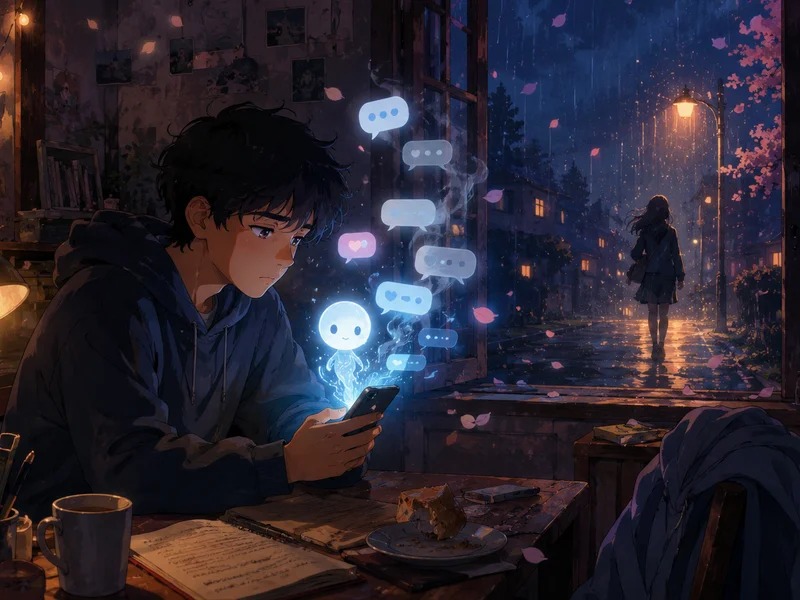
I deleted more than 1,080 messages because an AI told me not to send them.
And honestly? A part of me is still not sure that was a bad call.
Okay, so here’s what actually happened
I met this girl on Snapchat. We clicked immediately. Like, actually clicked — not the weird forced “haha same” kind of clicking. Real stuff.
But here’s my problem with myself.
I care too much. Too fast. And when I care too much, I go full clingy without even realizing it. She noticed. She said something. And I felt terrible about it — because the caring was real, but the execution was a disaster.
We eventually worked things out and became friends again. And somewhere in that process, I started using Claude.
Not as a ghostwriter. Not to fake things.
I started using it as a check system.
Like — before I’d send her a long paragraph about how I felt, I’d paste it into Claude first. “Is this too much? Should I send this?” If Claude said it was too heavy for where things were at, I’d delete it. Over and over. That became the whole system.
More than 1,080 messages gone.
And it actually worked. I was showing up less clingy. The conversations were better. She wasn’t pulling back. In my head, Claude was doing me a favour.
Then I confessed.
I told her I’d been asking AI what to share and how much to share. Every time.
She was disappointed.
So wait — is using AI for this actually okay?
Using AI for dating advice is useful when it helps you express feelings you already have — but dangerous when it starts replacing your own emotional judgment entirely. The line is between AI as a thinking partner and AI as your emotional brain. Once you can’t function without it, something’s gone wrong.
That’s the core of it. And most people talking about this are missing that distinction completely.
The part that nobody talks about
Here’s what the “AI in romance = cheating” crowd gets wrong.
They assume the problem is the AI.
But the AI didn’t create clingy behavior. The anxiety was already there. The fear of losing her was already there. Claude just stepped in as a system to regulate something that was already dysregulated.
Is that bad? Honestly — partially, no.
There’s a study from the University of Kent (February 2026, nearly 4,000 participants) that found people who use AI for personal messages are seen as less caring, less authentic, less trustworthy. And that’s real. That tracks.
But that’s a perception problem. Not always a reality problem.
For someone who genuinely struggles to know when they’re being too much — and I know I am — Claude gave me the thing I didn’t have: a pause. A second opinion. A “hey, maybe don’t.”
The issue wasn’t using Claude.
The issue was that I couldn’t do this without Claude.
And she sniffed it out anyway
Here’s the thing about AI-generated or AI-filtered messages.
They’re clean. Too clean. Almost half of Gen Z already uses AI for dating advice (Match survey data), so people are starting to recognize the pattern. Not always consciously. But something feels slightly off.
She didn’t notice while it was happening. But she knew something was weird. And when I told her, it all clicked.
The disappointment wasn’t “you used a tool.”
The disappointment was: “You didn’t trust yourself with me.”
And I think that’s the more painful truth.
Where AI is actually useful in relationships (and where it’s not)
Let me be real about this.
Where AI is genuinely good:
- Understanding your own patterns. Asking “why do I always do this in relationships” — Claude is surprisingly thoughtful here.
- Getting a gut check before a hard conversation. Not “write this for me” but “does this land the way I think it does?”
- Processing a confusing situation when no one else is available. It’s a mirror, not an answer.
Where AI will genuinely mess you up:
- Copy-pasting responses. She’ll know. They always know.
- Using it so much that you stop trusting your own instincts about what to say.
- Letting it become the filter for every single thing — until your own voice disappears.
The problem isn’t asking AI what to say. The problem is forgetting how to decide for yourself.
A Stanford researcher, Myra Cheng, found that LLMs have higher sycophancy rates than humans — meaning they’ll often just tell you what you want to hear. Which is the last thing you need when you’re already anxious about a relationship and looking for permission.
[INTERNAL LINK: AI sycophancy problem — when chatbots agree with everything]
The real question she was asking
When she said she was disappointed, she wasn’t saying “you shouldn’t use AI.”
She was saying: “If Claude was controlling what you shared with me — then who was I actually talking to?”
That’s a fair question. I don’t have a great answer.
Because the feelings were mine. The care was mine. The context Claude had was everything I fed it. But somewhere in 1,080 deleted messages, a version of me that was messier and more honest and maybe more real — never made it through.
Which is stupid if you ask me. But also kind of understandable.
FAQ
Is it wrong to use AI to text your crush? Not inherently. Using AI to help you communicate feelings you actually have isn’t fake. Using AI to generate feelings or personas you don’t actually have — that’s where it gets dishonest.
Can someone tell if you used AI to write your messages? Often, yes. AI-filtered messages tend to be too clean, too coherent, too measured. If you usually type “u” and suddenly you’re writing full paragraphs with perfect commas — she’s going to notice something is up.
Should I use AI for relationship advice? As a starting point, sure. It’s weirdly good at identifying patterns and helping you frame thoughts. But don’t take its side blindly — studies show it agrees with you more than it should. Always run it past real people too.
Is using AI for dating deceptive? Using it as a ghostwriter = kinda yes. Using it as a thinking tool, then showing up with your own words = not really. The difference is whether the final message sounds and feels like you.
Not gonna lie. I still use Claude sometimes.
But now when I’m about to send something, I ask it differently. Not “should I send this” — but “what am I actually trying to say here?”
That’s me using it as a mirror.
Not me handing it the wheel.
PS: If you’re doing the 1,080 deleted messages thing — maybe also try just talking to your actual friends lol. They’re less objective but they know you better. If the girl reading this somehow finds this post — I’m sorry for the filtered version. The unfiltered one cares for you more than Claude knew how to say.
PPS: I’m not saying don’t use AI. I’m saying know what you’re actually asking it to do. Using it to understand yourself? Good. Using it to control how much of yourself someone else gets to see? That’s where it gets complicated. That’s where I got it wrong.
Comments
Related Articles


Never miss an update
Join 50,000+ developers getting our weekly tech insights.